
OSPEDALE
Durante l’estate del 1944 Subbiano stava ospitando 1.500 sfollati. Questi sfollati venivano in campagna convinti di poter ritrovare rifugio e cibo che in città scarseggiava più che in campagna. La possibilità di poter mangiare una carota, una cipolla o qualcosa che venisse dall’orto era sicuramente più facile rispetto alle strade sterrate di Arezzo.
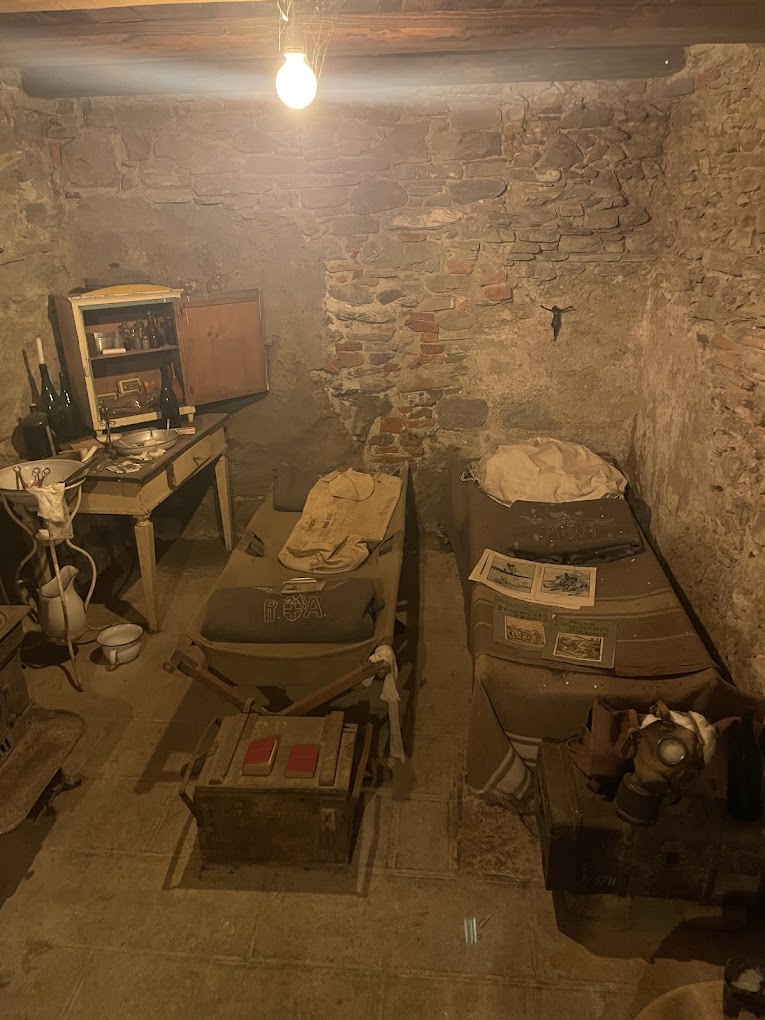
Ed ecco che però mancavano i posti ospedale. Per questo il dottor Todaro, primario dell’ospedale di Subbiano, decise di improvvisare degli ospedali lungo le cantine del borgo di Subbiano. Il nostro museo ha la stanza superiore e una stanza inferiore che era dedicata ad ospitare un ospedale d’emergenza.
La prima sala che noi stiamo vedendo in questo momento è una sala dove venivano a rifugiarsi le persone durante i bombardamenti. Ma non solo. Era un ambulatorio che faceva da anticamera a quello che poi era una camera d’ospedale.
Questa stanza, la seconda quindi, ospitava sei posti letto dove i cittadini di Subbiano, autoctoni e non, potevano trovare rifugio e cure durante quel tremendo periodo.
HOSPITAL
During the summer of 1944, Subbiano was hosting around 1,500 displaced persons. These evacuees had moved to the countryside believing they would find food more easily there, as it was far scarcer in the cities. The chance of eating a carrot, an onion, or something freshly picked from an orchard was certainly greater than along the dusty streets of Arezzo.
However, hospital space was lacking. For this reason, Doctor Todaro, head physician of the Subbiano hospital, decided to improvise makeshift hospitals in the cellars of the Subbiano village. In our museum, the upper room and the lower room were once part of this emergency hospital.
The first room we are looking at now served as a shelter where people took refuge during air raids. But not only that — it also functioned as a medical station, acting as a waiting or triage area for what later became an actual hospital ward.
This second lower room housed six hospital beds, where the residents of Subbiano — both locals and displaced persons — could find refuge and receive medical care during those terrible days.